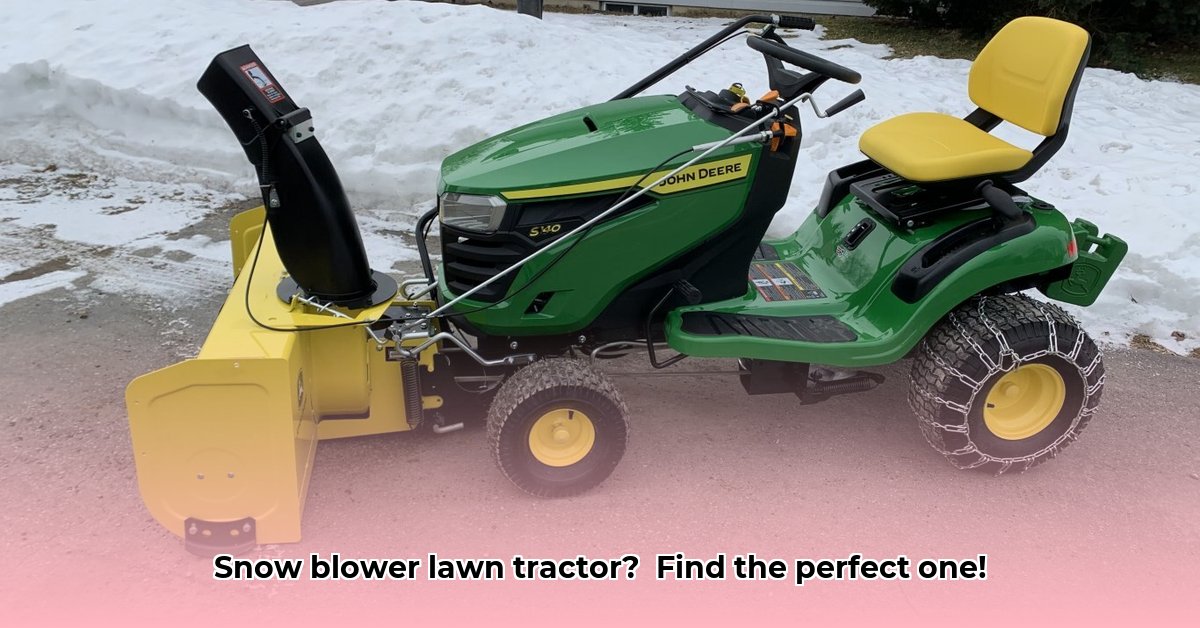
Lawn Tractors and Snow Blowers: A Winning Combination
Dreading the snow? Transform winter's dread into effortless snow removal with a snow blower attachment for your lawn tractor. This comprehensive guide simplifies the selection process, empowering you to choose the perfect snow-clearing solution for your needs. We’ll explore various snow blower types, compatibility considerations, essential accessories, and maintenance best practices, ensuring you're prepared for whatever winter throws your way. For even more detailed information, check out this helpful guide: Snow Blower Guide.
Understanding Your Snow Removal Needs
Before selecting a snow blower, assess your property and typical snowfall. Consider:
- Area Size: How large is your driveway, walkways, and other areas needing clearing? Larger areas require more powerful blowers.
- Snowfall: Do you experience light, fluffy snow or heavy, wet snow? Heavier snow necessitates a more robust snow blower.
- Terrain: Are there slopes or inclines on your property? Steeper inclines demand greater traction and stability.
Failing to consider these factors may lead to an inadequate snow blower, hindering efficiency and potentially causing damage to your equipment. What are the specific snowfall conditions and property size relevant to your situation?
Single-Stage, Two-Stage, and Three-Stage Snow Blowers: A Detailed Comparison
Snow blowers are categorized by their stage, each design offering unique capabilities:
Single-Stage: Ideal for light, fluffy snow on small areas. They're affordable and easy to maintain, but struggle with heavy or wet snow. Think of them as a more powerful shovel.
Two-Stage: The workhorse for most homeowners. They efficiently clear heavier, wetter snow from larger areas. They offer a significant improvement over single-stage models and manual shoveling.
Three-Stage: Designed for extensive properties and heavy snowfalls. Their powerful augers and impellers effortlessly tackle the toughest snow conditions, but come at a higher price point. These are for those with large, challenging areas.
| Feature | Single-Stage | Two-Stage | Three-Stage |
|---|---|---|---|
| Snow Type | Light, fluffy snow | Heavier, wet snow | Heavy, wet, packed snow |
| Area Size | Small driveways, walkways | Medium to large driveways, properties | Very large driveways, properties |
| Cost | Low | Moderate | High |
| Maintenance | Low | Moderate | Moderate to High |
| Power Needed | Low (from your tractor's PTO) | Moderate to High (from your tractor's PTO) | High (from your tractor's PTO) |
Matching Tractor Power to Snow Blower Capacity: A Critical Step
Incorrectly matching your tractor's horsepower to your snow blower's requirements is a common mistake. Underpowering your snow blower strains both the tractor and the attachment. Always refer to the owner's manuals for both the tractor and snow blower. Don't underestimate the importance of verifying your tractor's PTO (Power Take-Off) horsepower against the blower's power requirements.
Ensuring Compatibility: A Smooth Operation from Start to Finish
Manufacturers offer compatibility charts detailing the correct pairings between tractors and snow blowers. Utilizing these charts is essential for avoiding costly mistakes and ensuring the snow blower fits your tractor correctly. Ignoring this step can lead to improper mounting and operational issues.
Selecting the Right Attachment Type: Single, Double, or Triple Auger?
The auger system plays a crucial role in snow blower performance. Single-stage blowers typically use a single auger while two- and three-stage models use multiple augers. The type of auger system directly impacts the blower's ability to handle varying snow conditions and significantly affects efficiency.
Essential Accessories: Enhancing Performance and Safety
Accessories such as tire chains and weight kits significantly boost performance, safety, and stability. Tire chains enhance traction on icy surfaces preventing slippage. Weight kits improve stability, especially on slopes, preventing the tractor from tipping.
Maintenance and Lifespan: Keeping Your Snow Blower in Top Condition
Regular maintenance extends your snow blower's lifespan and ensures efficient operation. This includes:
- Regular Inspections: Check for wear and tear on belts, augers, and other components.
- Cleaning: Thoroughly clean your snow blower after each use, removing debris and preventing build-up.
- Lubrication: Keep components lubricated to reduce friction and prevent damage.
Neglecting these crucial steps can drastically shorten the lifespan of your equipment. What's your maintenance strategy to keep your snow blower in optimal condition throughout the winter?
Step-by-Step Guide to Choosing Your Snow Blower
- Assess Your Needs: Evaluate your property size and typical snowfall.
- Check Tractor Specifications: Verify its horsepower and PTO capabilities.
- Choose Snow Blower Type: Select a single, two, or three-stage model based on your needs.
- Confirm Compatibility: Use manufacturer compatibility charts to ensure a proper fit.
- Consider Accessories: Add tire chains and weight kits for improved performance and safety.
- Plan for Maintenance: Establish a regular maintenance schedule to prolong the lifespan of your snow blower.
Conclusion: A Snow-Free Winter Awaits
By following this guide, you'll confidently select and maintain a lawn tractor snow blower attachment, making winter snow removal efficient and worry-free. Remember, the right equipment paired with regular maintenance will save you both time and money while ensuring a safe and effective snow removal strategy.